I clearly remember the first film I ever watched on television from start to finish, as a child. It was Torn Curtain, by Alfred Hitchcock. It told the story of a scientist, Professor Armstrong (played by Paul Newman), who had to travel to East Germany to steal a formula from another scientist's brain. Until that day I had never managed to sit in front of the television and watch a film all the way through. Those were different times, when the screen seemed tremendously boring to me. Until Hitchcock hooked me.
The impression was so vivid that I came to believe television was an incredible source of experiences, that every film they showed would keep you glued to the sofa, eyes like saucers. Can you believe it! Of course, disappointment was not long in coming.
To be sure, for many film buffs Torn Curtain was far from the master's best film – it has been described as a bag of tricks. So why did it stick with me? Much later, I thought that Hitchcock might help students of the human brain understand better how it works.
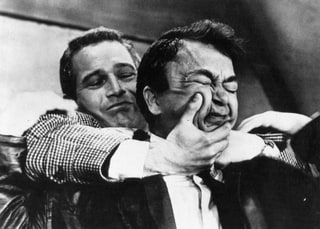
The scene in which Paul Newman (the physicist Armstrong) uses a gas oven to kill Gromek, the henchman the East German authorities have assigned to watch him, is one of my favorites. And it had to have some explanation in the language of neurons. The suspense unleashed when the Germans discover that Professor Armstrong is a spy, before Newman is aware of it, is like a delicious shiver and produces an almost addictive sensation. Something like that must surely leave a trace in the biochemistry of our heads. Don't you think?
Now a group of scientists at the City College of New York has found the answer. Eureka!
The scientists decided to study twenty subjects wearing electrode caps while they watched the short film Hitchcock directed for television, titled Bang! You're Dead, presented on one of his famous shows. Have you seen it? I'm sure the plot rings a bell. A little boy dressed as a cowboy swaps his toy gun for his father's, who has just returned from a trip to Africa. The boy pockets a few real bullets, and when they fall out he starts filling the holes in the cylinder. There comes a point when, with the cylinder fully loaded, the boy's next shot will end in catastrophe.
The boy aims at various people in his game but never quite pulls the trigger... until he returns home to play with the woman who looks after him. The father has noticed the switch, and the mother is desperately searching for the boy. But the viewers are well aware of the tragedy about to unfold... it is a simple, magnificent exercise by this cinematic genius.
The scientists found that in the climactic sequences, in which the boy loads the bullets one by one and in which he aims at his victims and is about to fire, the brain's neuroelectric activity peaked. They even correlated the peaks of activity with Hitchcock's editing, to the point that from each volunteer's electroencephalogram (EEG) you could tell which scene they were watching! How could it be otherwise! The master of suspense can teach us how our brain works. Here is a video that looks like something out of science fiction. Watch the peaks in the EEG graph. They reach their highest when the suspense builds.
Video courtesy of The City University of New York.
In an earlier study, using a functional magnetic resonance imaging scanner able to visualize the brain at work, scientists at New York University had already shown that the Hitchcock suspense in this short film activated 65 percent of the cerebral cortex in all the volunteers.
In other words, the brain's engagement was the greatest, and in every case. Similar tests were carried out while people watched scenes from Sergio Leone's film The Good, the Bad and the Ugly (which achieved a 45 percent response – not bad, but below the British director).
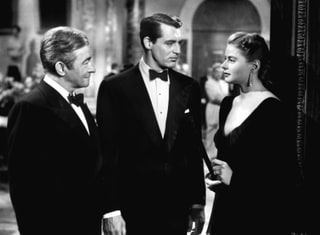
Of course, there are many other examples. The famous shower murder scene at the Bates Motel in Psycho; the way Ingrid Bergman steals the wine-cellar key from Claude Rains in Notorious while he takes her hands, saying “I trust you,” opening and kissing her right hand, the very one we think is hiding the key... and it's in the other one! Or the tense wait as the champagne runs out at the party and Rains will have to go down to the cellar for more, the moment he will discover the key has been stolen... What is the favorite suspense scene of Planeta Prohibido's readers?
(By the way, in 1961 a flock of seagulls went mad, hurling themselves against the houses on Monterey Bay, in California. Scientist Sibel Bargu, of the University of Louisiana, decided to find out why and studied the stomach contents of turtles and seagulls collected that year during surveys carried out from ships. Bargu found that they contained a type of toxic alga that affected the birds' brains and nerves, and is convinced that this is the cause of that suicidal behavior. Two years later, Hitchcock would release The Birds, one of his best films.)